Navigating a new country’s financial landscape can be as tricky as navigating its roads. In Jamaica, the question isn’t just “What is the currency?” but rather “Which currency should I actually use?” The answer is nuanced, depending heavily on whether you are lounging in an all-inclusive resort in Montego Bay or hunting for the best jerk chicken in the Blue Mountains.
The Essential Guide to Currency in Jamaica: What Every Traveler Needs to Know
This guide dismantles the confusion surrounding Jamaican money. We will cover the official tender, exchange rates, tipping culture, and the “cash vs. card” debate, ensuring you spend less time calculating exchange rates and more time enjoying the reggae rhythms.
The Short Answer: What is the Official Currency of Jamaica?
The Jamaican Dollar (JMD) is the official currency of Jamaica.
Locals refer to it as “Jay-Mad” or simply “dollars.” You will see it abbreviated as J$ or JA$ on price tags to distinguish it from the US Dollar.
However, the US Dollar (USD) is widely accepted—and often preferred—in major tourist hubs. This dual-currency reality is convenient but can lead to “tourist tax” pricing if you aren’t careful.
The “Two-Wallet” Strategy
For the savvy traveler, the best approach is a hybrid one.
-
Use USD for hotel transfers, large tours, and duty-free shopping.
-
Use JMD for local supermarkets, roadside fruit vendors, and taxis to avoid poor exchange rates.
Visualizing the Money: Banknotes and Coins
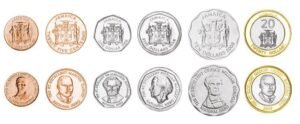
Jamaican money is colorful and historic, featuring national heroes and iconic landmarks. Familiarizing yourself with the bills before you land prevents confusion at the checkout counter.
Banknotes (The “Paper” Money)
-
$50: Front features Samuel Sharpe (National Hero).
-
$100: Front features Sir Donald Sangster.
-
$500: Often called a “Nanny,” featuring Nanny of the Maroons.
-
$1,000: Features Michael Manley.
-
$5,000: The highest denomination, featuring Hugh Shearer.
Pro-Tip: Try to break $1,000 and $5,000 notes at your hotel front desk or a large supermarket. Small vendors and taxi drivers rarely have change for these high-value bills.
Coins
-
$1, $10, $20: These are common. The $20 coin is effectively replacing the $20 bill.
-
Useful for: Tipping bag handlers or rounding up fare.
USD vs. JMD: A Comparative Breakdown
Should you exchange money before you leave? Generally, no. You will get a far better rate withdrawing from an ATM in Jamaica than buying JMD at your local bank back home.
Here is a quick decision matrix to help you decide which currency to pull out of your wallet:
| Scenario | Best Currency to Use | Why? |
| All-Inclusive Resorts | Credit Card / USD | Prices are pegged to the US dollar; paying in JMD often involves a bad exchange rate. |
| Roadside Jerk Stands | JMD | Vendors may not know the daily exchange rate and will “round up” in USD, costing you more. |
| Official Taxis (Red Plate) | JMD | Meters and negotiated fares are locally set. Paying in USD usually results in a 20% markup. |
| Supermarkets (Hi-Lo, etc.) | JMD / Credit Card | Registers are set to JMD. Paying in USD often yields change in JMD at a poor rate. |
| Tour Guides / Tipping | USD or JMD | Both are happily accepted. USD is often preferred for larger tips. |
Banking, ATMs, and Cards
Modern travel standards apply in Jamaica, but infrastructure varies. In Kingston, Montego Bay, and Ocho Rios, digital payments are seamless. In rural parishes (like Portland or St. Elizabeth), cash is king.
Using ATMs in Jamaica
ATMs are the most cost-effective way to get JMD.
-
Reliable Banks: Look for Scotiabank (bright red branding) or NCB (National Commercial Bank). They accept most international Visa and Mastercards.
-
The Fees: You will likely be hit with two fees—one from the local machine (approx. J$500–$800) and one from your home bank.
-
Security: Never use a standalone ATM on a dark street. Only use machines inside a bank lobby, a hotel, or a guarded shopping center.
Expert Recommendations for Smart Spending
-
Travel Cards: To avoid the 3% foreign transaction fee most banks charge, use a travel-focused card like Wise or Revolut. These allow you to hold JMD digitally or convert at the mid-market rate.
-
Credit Cards: Visa and Mastercard are accepted almost everywhere. American Express and Discover have lower acceptance rates outside of luxury resorts.
The Cost of Travel: Budgeting for Your Trip
Understanding the value of the currency helps you budget. While exchange rates fluctuate, here is a rough baseline of what things cost in Jamaica to help you spot a rip-off.
-
Red Stripe Beer (Bar): J$400 – J$700
-
Jerk Chicken Meal (Roadside): J$800 – J$1,500
-
Taxi (Short ride in town): J$200 – J$500 (Always negotiate before getting in!)
-
Dinner at a Mid-Range Restaurant: J$3,000 – J$6,000 per person
Pro-Tip: If a vendor quotes you a price that seems high (e.g., “20 dollars”), always clarify: “Jay-Mad or US?” Unscrupulous vendors may rely on your assumption that they mean JMD, when they actually mean USD.
Tipping Culture in Jamaica
Tipping is a sensitive subject. While it is standard in the US, the rules differ in the Caribbean.
-
All-Inclusive Resorts: Some brands (notably Sandals and Couples) have a strict “No Tipping” policy. Staff can be fired for accepting cash. Check your resort’s policy upon arrival.
-
Restaurants: Check your bill for a “Service Charge” (usually 10-15%). This is effectively the tip. You can add more for exceptional service, but it is not mandatory.
-
Housekeeping: $2–$5 USD per day is a standard and appreciated gesture. Leave it on the pillow with a note.
Safety and Scams: Protecting Your Pocket
Jamaica is beautiful, but economic disparity exists. Flaunting cash makes you a target.
-
The “Change” Scam: If you pay in USD, always ask what currency the change will be in. A common trick is to take your USD and give you change in JMD at a terrible exchange rate (e.g., treating 1 USD as 100 JMD instead of ~155 JMD).
-
ATM Skimming: Cover your hand when typing your PIN. Skimming devices are occasionally found in high-traffic tourist ATMs.
-
Travel Gear: Consider using an anti-theft wallet or a cross-body bag with locking zippers (brands like Pacsafe are excellent for this) when walking in downtown areas or markets.
FAQ: Common Questions About Jamaican Currency
What is the best currency to take to Jamaica?
Bring a mix. Carry about $200-$300 USD in small bills ($1s, $5s, $10s) for tips and initial expenses. For everything else, withdraw JMD from an ATM upon arrival.
Can I use my debit card in Jamaica?
Yes, provided you have notified your bank of your travel dates. However, use it primarily at ATMs. For purchases in shops or restaurants, a credit card offers better fraud protection.
Do Jamaican taxi drivers take credit cards?
Rarely. Official “JUTA” tour buses might, but the average route taxi or charter taxi is a cash-only operation. Always carry small JMD notes for transport.
Is Jamaican money waterproof?
No, unlike the polymer notes used in the UK or Canada, Jamaican banknotes are largely cotton-based paper. If you swim with them, they will disintegrate. Check your pockets before diving into the Caribbean Sea!
What is the currency in Jamaica called?
It is officially the Jamaican Dollar. You may hear locals refer to money as “ends” or “bread” in slang, but “dollars” is the universal term.
How much cash can I bring into Jamaica?
You must declare currency exceeding $10,000 USD upon entry. This includes a combination of cash, traveler’s checks, and other monetary instruments.
Why is the exchange rate different at the airport?
Airport exchange bureaus (Cambios) pay high rent for their location and pass that cost on to you via terrible exchange rates. Avoid exchanging money at the airport if possible; wait until you reach an ATM or a bank in town.